
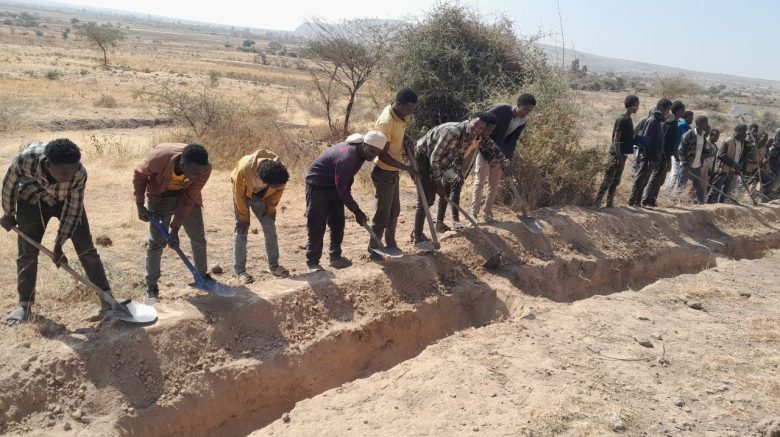
In a powerful demonstration of community-led environmental action, the Vision of Community Development Association successfully completed a series of Soil and Water Conservation (SWC) works throughout February.
This initiative was not just about labor; it was a collaborative effort involving Abine Kebele residents, Woreda Agriculture and Land Office experts, and local administration leaders. Together, we are building a more resilient landscape to fight poverty and restore our natural heritage.
Knowledge First: Empowering the Community
Success in the field begins with knowledge in the classroom. To ensure the sustainability of our efforts, we provided targeted beneficiaries with fundamental SWC technical training.
By mastering these techniques, our community members are now equipped to lead long-term agro-ecological restoration and biodiversity conservation efforts. The training focused on three “climate-smart” pillars:
-
Terracing: Stabilizing slopes to prevent nutrient-rich topsoil from washing away.
-
Contour Plowing: Managing water flow naturally across the landscape.
-
Water Harvesting: Capturing and storing vital moisture for the growing season.
The Impact of Our Work
These physical and technical interventions serve a dual purpose: environmental healing and economic stability.
| Objective | Community Benefit |
| Land Restoration | Reverses the damage of over-farming and restores degraded plots. |
| Erosion Control | Significantly reduces water-induced soil loss during heavy rains. |
| Agricultural Yield | Improved soil quality leads directly to higher productivity for farmers. |
| Poverty Alleviation | Stable harvests create a more secure financial future for families. |
A Vision for a Healthy Ecosystem
From day one, our project has remained committed to a single, powerful goal: creating a healthy ecosystem that supports human life. By protecting the soil and managing our water, we are not just farming—we are safeguarding the biodiversity and livelihoods of the Abine region.
“When we save the soil, we save the future. This work in Abine is a blueprint for how community participation can drive global environmental goals.”